
 Adam Mitchell, IBAO Young Broker of the Year 2019
 Ontario Trucking Insurance is a network of RIBO-licensed insurance brokers specializing in commercial trucking. All content is written and reviewed by active industry professionals with direct underwriting experience. Expert review by Adam Mitchell, IBAO Young Broker of the Year 2019 (Mitch Insurance Brokers), edited by Jennifer Oegema (Oegema, Nicholson & Associates). Our editorial standards →
Key Takeaway: Finding the right insurance for hazmat haulers in Ontario requires specialized environmental and liability policies far beyond standard freight coverage. Depending on the Transport Canada hazard class, single-truck operators can expect premiums between $15,000 and $35,000 annually. You must secure robust Environmental Impairment Liability (EIL) and maintain a clean Commercial Vehicle Operator's Registration (CVOR) to stay legally compliant under the Transportation of Dangerous Goods (TDG) Act and avoid crippling cleanup costs.

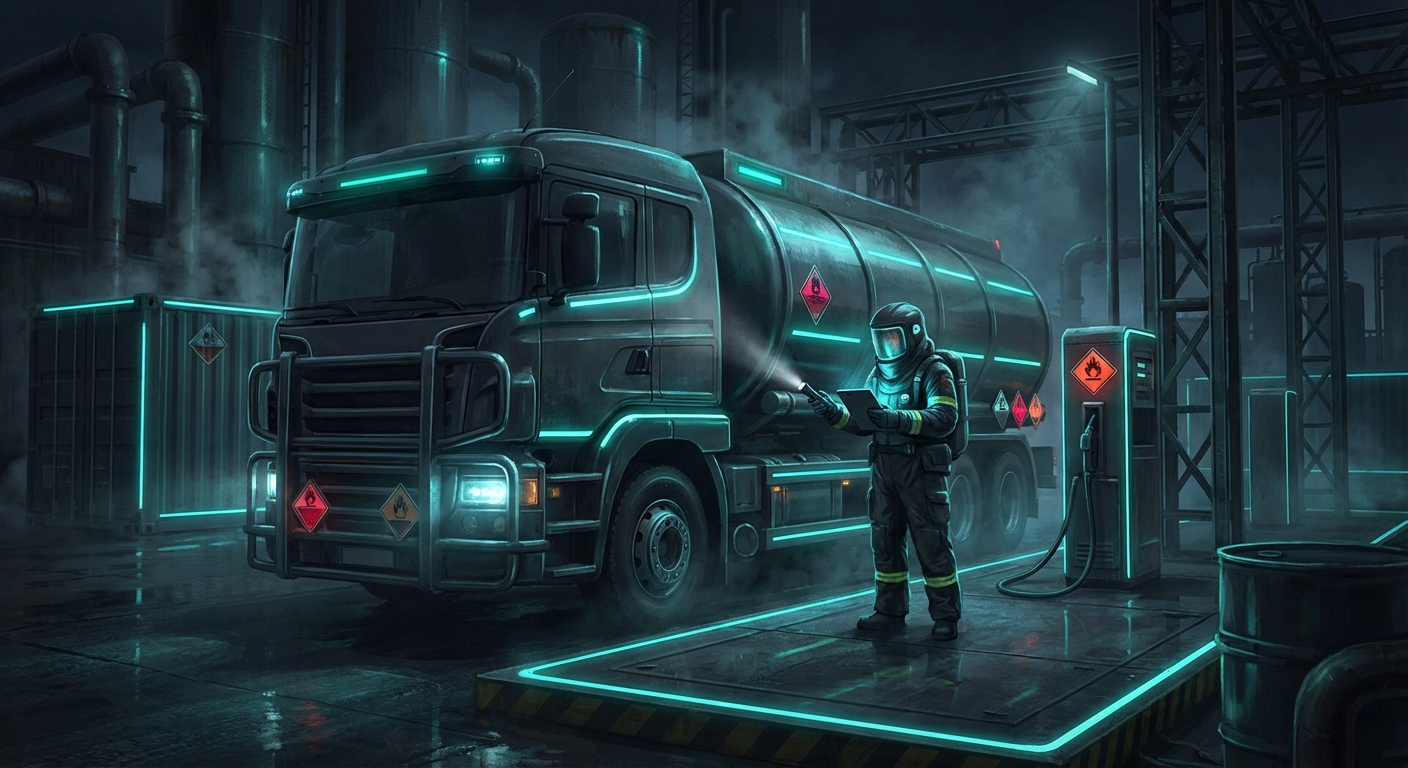
MTO officers rigorously inspect hazmat haulers; maintaining proper insurance documentation is critical to keeping your CVOR in good standing.
What Is Insurance for Hazmat Haulers?
Hazmat (hazardous materials) trucking insurance is a specialized bundle of commercial policies designed to protect motor carriers transporting dangerous goods within Ontario or across international borders. Unlike standard dry van freight, a hazmat spill doesn't just result in damaged cargo—it can trigger catastrophic environmental damage, massive third-party liability claims, and intense scrutiny from the Ministry of the Environment, Conservation and Parks (MECP).
As Jennifer Oegema, a regulatory compliance expert in Ontario trucking notes: "When you haul dangerous goods, you're not just moving freight—you are managing a mobile environmental liability. Your insurance must perfectly mirror the exact hazard classes listed on your TDG shipping documents."
Comprehensive Hazmat Insurance Typically Covers:
- Environmental Impairment Liability (EIL) — Covers site cleanup, soil remediation, water contamination, and government fines following a sudden and accidental spill.
- Enhanced Third-Party Liability — Up to $5M to $10M in limits for severe bodily injuries or third-party property damage caused by toxic releases, chemical fires, or explosions.
- Specialized Hazmat Cargo Insurance — Reimburses shippers for high-value bulk chemical products, pressurized gases, or specialized volatile loads.
- Loading & Unloading Liability — Crucial coverage during the most high-risk phase of transport when dangerous goods are transferred at terminals or industrial chemical plants.
- Debris Removal & Emergency Towing — Highly specialized towing for chemically contaminated equipment, which can easily exceed $25,000 per incident.
Operating a commercial truck in Ontario without the correct pollution extensions is a gamble that could instantly bankrupt a motor carrier.
What's NOT Covered
Most standard auto liability and cargo policies contain an "absolute pollution exclusion." If you haul Class 3 flammables (like fuel) with a standard dry van policy, your insurer will deny the claim entirely if a spill occurs. Similarly, gradual pollution—such as a slow, unnoticed oil leak in your operational yard over six months—is rarely covered under standard sudden and accidental pollution extensions.
Why You Need Specialized Hazmat Hauler Coverage
Mandatory TDG Act Compliance
Federal law requires motor carriers to maintain strict financial responsibility. While the legal minimum is $2M, practically all top-tier shippers demand a $5M minimum liability certificate before loading dangerous goods onto your trailer.
The Staggering Cost of Hazmat Cleanup
If a load of corrosives leaks on the 401, you pay for the cleanup. Specialized hazmat vacuum trucks, soil removal, and asphalt replacement in Ontario routinely exceed $200,000—costs that standard insurance simply ignores.
Protecting Your CVOR and Authority
MTO officers place hazmat haulers under a microscope. Operating without adequate insurance is a severe violation that will lead to an immediate suspension of your CVOR, effectively shutting down your business.
Securing High-Paying Contracts
Chemical manufacturers and lucrative freight brokers audit your insurance certificates relentlessly. Having specialized EIL and hazmat cargo coverage is your ticket to securing the highest paying freight lanes in Canada.
Hazmat Transport Rates Ontario: How Much Does It Cost?
Pricing for hazmat transport rates is strictly governed by the product class, your radius of operations, and the driver's CVOR abstract. Here is a breakdown of what a single truck operation in Ontario can expect to pay annually.
| Hazard Class Profile | Minimum Recommended Liability | Average Annual Premium |
|---|---|---|
| Class 9 (Miscellaneous / Dry Batteries) | $2,000,000 | $12,000 – $18,000 |
| Class 3 (Flammable Liquids / Fuel) | $5,000,000 | $18,000 – $25,000 |
| Class 8 (Corrosives / Industrial Acids) | $5,000,000 | $22,000 – $28,000 |
| Class 2 (Compressed Gases / Propane) | $5,000,000 | $24,000 – $32,000 |
| Class 1 & 7 (Explosives / Radioactive) | $10,000,000+ | $35,000+ (Specialty Markets) |
Factors That Affect Your Hazmat Rate:
Real Claim Examples
Real-world incidents demonstrate exactly why relying on standard commercial insurance is a massive financial risk for hazmat haulers. These Ontario examples show what happens when dangerous goods escape containment.
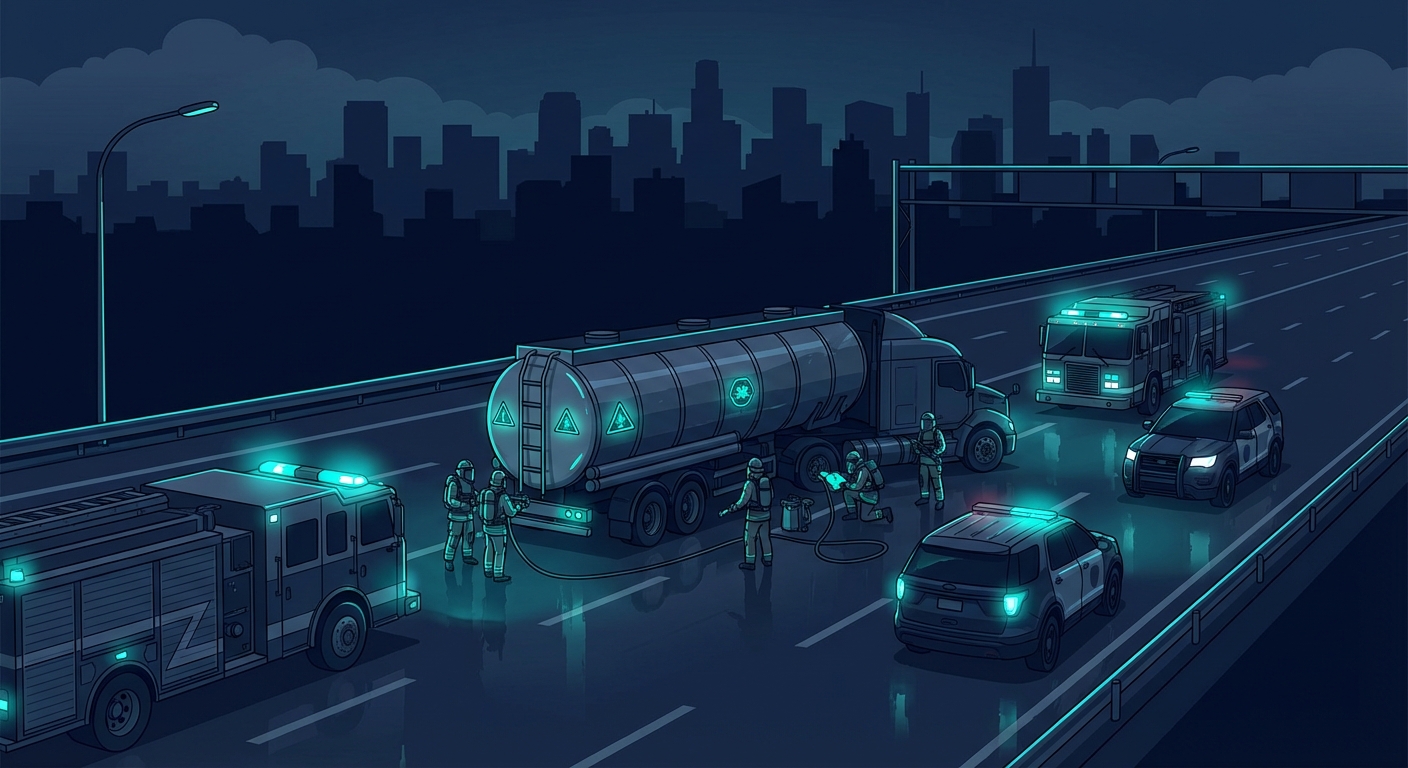
Class 3 Flammable Liquid Rollover on Highway 401

A tanker carrying 40,000 litres of diesel fuel overturned near London due to black ice. The spill required immediate Ministry of the Environment notification and specialized hazmat vacuum cleanup crews.
Class 8 Corrosives Leak in Mississauga Terminal
During a routine cross-docking transfer, an improperly secured tote of industrial acid ruptured, severely damaging the facility's concrete floor and a third-party trailer parked adjacent to the loading dock.
Mixed Dangerous Goods Fire on Highway 17

A 53-foot dry van carrying mixed palletized goods, including Class 5 Oxidizers, caught fire near Sudbury after a catastrophic trailer brake lockup. The entire cargo and tractor-trailer were reduced to ash.
TDG Compliance and Truck Insurance Requirements
Ontario's trucking landscape is heavily regulated. For hazmat carriers, the federal Transportation of Dangerous Goods (TDG) Act works hand-in-hand with the provincial Highway Traffic Act to ensure public safety. Every driver must carry a valid TDG training certificate, and every load must display the appropriate safety marks and placards.
Under MTO Regulation 424/97, the Ministry of Transportation tracks every inspection, warning, and violation on your Commercial Vehicle Operator's Registration (CVOR). For hazmat haulers, the stakes are exponentially higher. A simple load securement violation on a load of Class 8 Corrosives carries far more penalty weight than a similar violation on a load of lumber. Insurers actively monitor these metrics.
Furthermore, if your fleet crosses the border into Michigan or New York, you must comply with the FMCSA's strict requirements, including the mandatory MCS-90 endorsement attached to your auto liability policy. This endorsement guarantees the US government that your insurer will pay for environmental restoration following an accident on US soil, regardless of any underlying policy exclusions.
Hazmat Hauler CVOR Requirements: Risk of Losing Your Authority
If your CVOR drops to "Conditional" or "Unsatisfactory" while hauling dangerous goods, many standard insurance markets will drop your coverage immediately at renewal. You will be forced into the high-risk Facility Association, where premiums can easily double or triple, making your operation completely uncompetitive in the Ontario market.
Tips to Lower Your Hazmat Transport Rates
Implement Rigorous TDG Training
Ensure every driver completes certified Transportation of Dangerous Goods training annually, not just the legally required 3-year minimum. Insurers reward proactive safety cultures.
Maintain a Flawless CVOR
Hire an external compliance consultant to routinely audit your driver logs and maintenance records. A 'Satisfactory' rating is the single biggest premium lever you control in Ontario.
Install Forward-Facing Cameras
Telematics and dash cams prove to underwriters that you actively manage driver behavior, often yielding a 5-10% discount on liability premiums.
Niche Down Your Hazard Classes
Don't apply for "all classes" coverage if you only haul Class 3 flammables. Insurers price based on the absolute highest risk you are legally authorized to haul.
Increase Your Cargo Deductible
Taking a $5,000 or $10,000 deductible on your cargo insurance shows the insurer you have skin in the game, lowering the base rate.

Environmental Impairment Liability (EIL) ensures specialized emergency response teams are funded immediately following an accident.
Get Your Hazmat Trucking Insurance Quote
Free quotes from licensed Ontario brokers
Frequently Asked Questions
What is the minimum liability insurance for hazmat haulers in Ontario?
While Ontario law strictly requires a minimum of $2,000,000 in commercial liability, almost all chemical shippers and commercial freight brokers mandate a minimum of $5,000,000 in Commercial General Liability (CGL) and Auto Liability to handle hazardous materials effectively.
Does standard commercial auto insurance cover dangerous goods?
No. Standard commercial auto insurance contains an absolute pollution exclusion. If you spill dangerous goods, a standard policy will not pay for the environmental cleanup, Ministry fines, or specialized towing, leaving you personally liable for hundreds of thousands of dollars.
How much does environmental impairment liability cost for trucking?
A standalone Environmental Impairment Liability (EIL) or pollution policy typically costs between $2,500 and $6,000 annually for a single truck in Ontario. This depends heavily on the specific hazard classes you haul and your requested coverage limit (usually ranging from $1M to $5M).
What happens if my CVOR safety rating drops while hauling hazmat?
If your CVOR rating drops to 'Conditional' due to violations, standard insurance markets may immediately decline your renewal. You will likely be forced into the high-risk residual market (Facility Association), where hazmat premiums can spike to $40,000 or more per truck, making operations economically unviable.
Do I need US DOT hazmat insurance to cross the border from Ontario?
Yes. If you transport hazardous materials into the United States, you must carry an MCS-90 endorsement on your policy. This federally mandated endorsement guarantees that funds are available for environmental restoration if an accident occurs on US soil, regardless of policy exclusions.
What hazard classes require the most expensive insurance?
Class 1 (Explosives), Class 7 (Radioactive Materials), and certain inhalation hazards (Class 2.3) are the most expensive and difficult to insure. Many standard trucking insurers will not touch these classes, requiring you to purchase coverage from specialized excess and surplus (E&S) markets at a steep premium.
Related Coverage Options
This content is for informational purposes only and does not constitute formal insurance or legal advice. Transportation of Dangerous Goods (TDG) requirements and specialized hazmat insurance pricing vary significantly based on individual risk profiles and hazard classes. Always consult a licensed Ontario insurance broker for advice specific to your operational authority.