
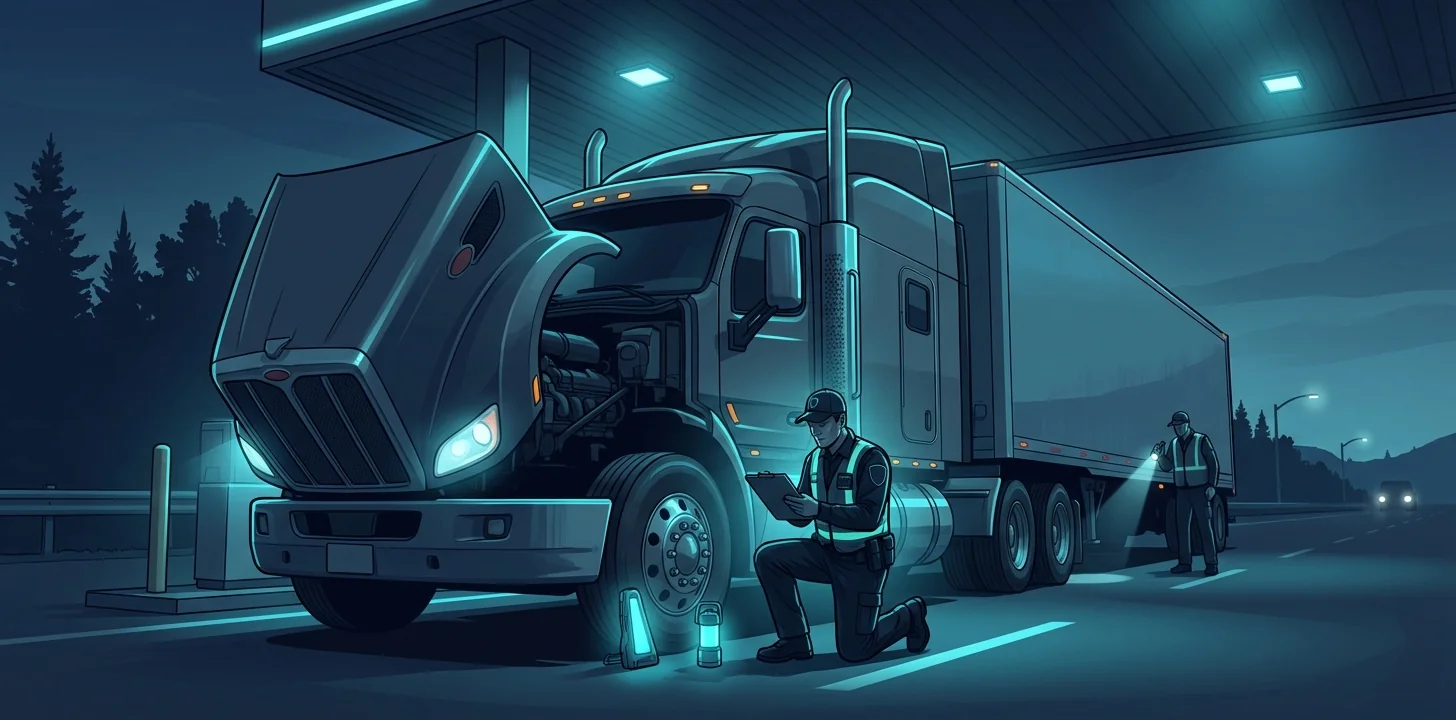
What is CVOR? A Complete Guide for Ontario Trucking Companies
If you operate commercial vehicles in Ontario in 2026, understanding the CVOR system isn't optional—it's essential for your business survival. Your CVOR record directly impacts your insurance costs, ability to operate, and reputation in the industry.
Key Takeaways
- CVOR is required for all commercial vehicles over 4,500 kg in Ontario
- Your safety rating affects insurance premiums by 35-75%
- Camera tickets count against your CVOR record
- Infractions stay on record for 2 years minimum
What Does CVOR Stand For?
CVOR stands for Commercial Vehicle Operator's Registration. It's a safety monitoring system administered by the Ontario Ministry of Transportation (MTO) that tracks the safety performance of commercial motor vehicle operators.
Think of your CVOR as your company's safety report card. Every inspection, collision, conviction, and at-fault accident gets recorded and contributes to your overall safety rating.
Who Needs a CVOR Certificate?
You need a CVOR certificate if you operate:
- Trucks or truck-trailers with a registered gross weight over 4,500 kg
- Buses designed to carry 10+ passengers
- Any commercial vehicle requiring a CVOR cab card for legal operation
Owner-Operators Take Note
Even if you operate under another carrier's authority, you may still need your own CVOR if you own/lease your equipment. This is a common source of confusion—and compliance issues.
The Three CVOR Safety Ratings
The MTO assigns one of three safety ratings based on your carrier profile's violation rate:
Satisfactory
Your violation rate is within acceptable limits. Standard insurance rates apply. Maintain this through clean operations.
Conditional
Your violation rate exceeds thresholds. Expect facility audits, possible sanctions, and 35-50% higher premiums.
Unsatisfactory
Serious safety concerns. Fleet limitations, suspensions possible. Insurance may be cancelled or 75%+ increases.
How CVOR Points Impact Your Insurance
Insurance underwriters pull your CVOR abstract when quoting commercial truck insurance. Your safety rating is one of the most significant factors determining your premium—sometimes more important than your claims history.
Here's how it typically breaks down:
| CVOR Rating | Premium Impact | Carrier Availability |
|---|---|---|
| Satisfactory | Standard rates | Full market access |
| Conditional | +35% to +50% | Limited to specialty markets |
| Unsatisfactory | +75% or declined | Facility markets only (if available) |
Common CVOR Violations and Their Point Values
Not all violations are equal. Here's what can accumulate on your CVOR:
- Speeding (photo radar): 1-5 points depending on speed over limit
- Red light camera: 3 points
- Out-of-service violations: 5-20 points
- Hours of service violations: 3-5 points
- Vehicle defects: 1-5 points per defect
- At-fault collisions: Up to 25 points for fatal collisions
The Camera Ticket Problem
Many carriers are surprised to learn that photo radar and red light camera tickets affect their CVOR—even though drivers don't get personal demerit points. The MTO attributes these to the carrier, impacting your safety rating and insurance costs. Learn strategies to mitigate this →
How to Check Your CVOR Status
You can request your CVOR Abstract (carrier profile) from ServiceOntario. This document shows:
- Your current safety rating
- Total points accumulated in the past 2 years
- Breakdown of all violations by type
- Any sanctions or conditions applied
Pro tip: Review your abstract quarterly and before renewing insurance. Errors do happen—and correcting them before your renewal can save thousands.
Maintaining a Satisfactory CVOR Rating
Your CVOR is a living document. Every day your trucks are on the road, you're building (or damaging) your safety record. Here are proven strategies:
- Pre-trip inspections: Document every inspection. This creates a paper trail showing due diligence if violations occur.
- Driver training: Regular safety meetings and training sessions reduce violations and demonstrate safety culture.
- Speed limiters: Consider setting limiters slightly below the limit to avoid camera ticket accumulation.
- Fight contestable tickets: Work with a traffic paralegal to challenge violations. Even reducing one violation can impact your rating.
- Proactive maintenance: Mechanical defects found in roadside inspections add points. Preventive maintenance is cheaper than violations.
CVOR Classification by Trucking Type
Ontario Trucking Insurance Classification Reference
Cross-reference table for NAICS, WSIB, ISO, and NCCI codes
| Category | NAICS (i) | WSIB (i) | ISO (i) | Risk Level | Avg. Premium |
|---|---|---|---|---|---|
| General Freight Trucking, Long-Distance Long-haul trucking operations exceeding 150km radius | 484121 | 70220 | CA 7219 | High | $12,000 - $18,000/year |
| General Freight Trucking, Local Local delivery within 150km radius | 484110 | 70210 | CA 7218 | Medium | $6,000 - $10,000/year |
| Specialized Freight - Refrigerated Temperature-controlled cargo transport | 484230 | 70230 | CA 7228 | High | $14,000 - $22,000/year |
| Specialized Freight - Flatbed/Heavy Haul Oversized loads, machinery, construction equipment | 484220 | 70230 | CA 7222 | Very High | $18,000 - $28,000/year |
Note: Premium estimates are based on 2024 Ontario market rates for operators with clean CVOR records. Actual premiums vary based on experience, claims history, fleet size, and cargo type. Get a personalized estimate →
Related Coverage Guides
Third-generation broker and eighth President of Staebler Insurance since 2019. Joanna brings tech-forward innovation to the 150+ year-old brokerage, which is an Ontario Trucking Association member specializing in fleet and long-haul trucking.
Get a Quote That Reflects Your True Safety Record
We work with insurers who understand CVOR nuances. A borderline rating doesn't have to mean maximum rates.
Get Your Estimate