
 Adam Mitchell, IBAO Young Broker of the Year 2019
 Ontario Trucking Insurance is a network of RIBO-licensed insurance brokers specializing in commercial trucking. All content is written and reviewed by active industry professionals with direct underwriting experience. Expert review by Adam Mitchell, IBAO Young Broker of the Year 2019 (Mitch Insurance Brokers), edited by Fred Morison (Morison Insurance Brokers). Our editorial standards →
Key Takeaway: Standard commercial truck insurance in Ontario typically does not automatically cover towing costs for your own vehicle. This essential protection must be added as an endorsement to your physical damage or commercial auto policy. Without it, a single heavy-duty tow and recovery can cost upwards of up to $5,000, leaving your business exposed to significant out-of-pocket expenses.
Specific endorsements are needed to cover your truck for towing and recovery operations.
What Is Commercial Towing Insurance?
Commercial Towing Insurance is an optional coverage, or endorsement, added to your existing policy that pays for the costs of towing your insured truck if it becomes disabled. This isn't just for tow truck operators; it's a critical safeguard for any carrier, owner-operator, or fleet manager in Ontario. A breakdown on Highway 17 or the QEW can halt your operations instantly, and this coverage ensures you can get your vehicle to a repair shop without incurring a massive bill.
Towing Endorsements Typically Cover:
- Towing Costs: Pays to tow your disabled vehicle to the nearest qualified repair facility.
- Winching/Extraction: Covers the cost of pulling your truck out of a ditch, mud, or snow.
- On-Scene Labour: Includes minor mechanical adjustments at the scene of the breakdown (e.g., jump-starts, tire changes).
- Recovery Services: For more serious accidents, this helps cover the complex process of recovering a rolled or overturned vehicle.
- Initial Storage: Often covers storage fees at a tow yard for the first 24-48 hours post-incident.
It's crucial to differentiate this from general liability or even standard physical damage coverage. As Fred Morison, a senior insurance advisor with 30+ years of experience, notes: "Many operators assume their comprehensive physical damage policy covers towing. In reality, it covers repairs from a loss, but not necessarily the cost to get the truck to the garage. That's a specific, and vital, add-on."
What's NOT Covered
This coverage typically excludes towing due to impoundment from a CVOR violation, abandonment, illegal parking, or as a result of a mechanical failure that isn't related to a covered peril (like an accident or fire).
Why Ontario Truckers Need Towing Coverage
Bridge Gaps in Standard Policies
Research from the Insurance Brokers Association of Ontario (IBAO) suggests that fewer than 40% of standard commercial auto policies for small carriers lack adequate towing and recovery endorsements, creating a major financial risk.
Avoid Crippling Out-of-Pocket Costs
A simple tow is one thing, but a heavy-duty rotator recovery for a rolled semi can cost $10,000-$20,000. This coverage turns a potentially business-ending bill into a manageable deductible.
Meet Shipper & Broker Requirements
Many high-value load contracts and broker agreements now mandate proof of comprehensive coverage, including roadside assistance and towing, to ensure their cargo is not left stranded.
Minimize Operational Downtime
Every hour your truck is on the side of the road costs you money—potentially $800 per day in lost revenue. Quick towing and recovery gets your asset to a repair shop faster, shortening downtime.
How Much Does Towing Coverage Cost in Ontario?
The cost of adding towing coverage to your commercial truck insurance in Ontario typically ranges from $500 to $2,500 per year, per vehicle. The price depends heavily on the type of truck, its value, your operating radius, and the coverage limits you select.
| Vehicle / Operation Type | Typical Coverage Limit | Estimated Annual Premium (Add-on) |
|---|---|---|
| Box Truck / Cube Van | $5,000 per incident | $500 - $900 |
| Straight Truck | $10,000 per incident | $750 - $1,200 |
| Tractor-Trailer | $25,000 per incident | $1,200 - $2,500 |
| Owner-Operator (General Freight) | $15,000 per incident | $900 - $1,600 |
| Tow Truck (On-Hook Liability) | $100,000 - $250,000 | $2,000 - $5,000+ |
Key Factors That Affect Your Rate:
Real Ontario Towing Claim Examples
These scenarios highlight how quickly towing-related costs can escalate and why having the right coverage is a non-negotiable part of risk management for any Ontario trucking operation.
Tractor-Trailer Rollover on Highway 401
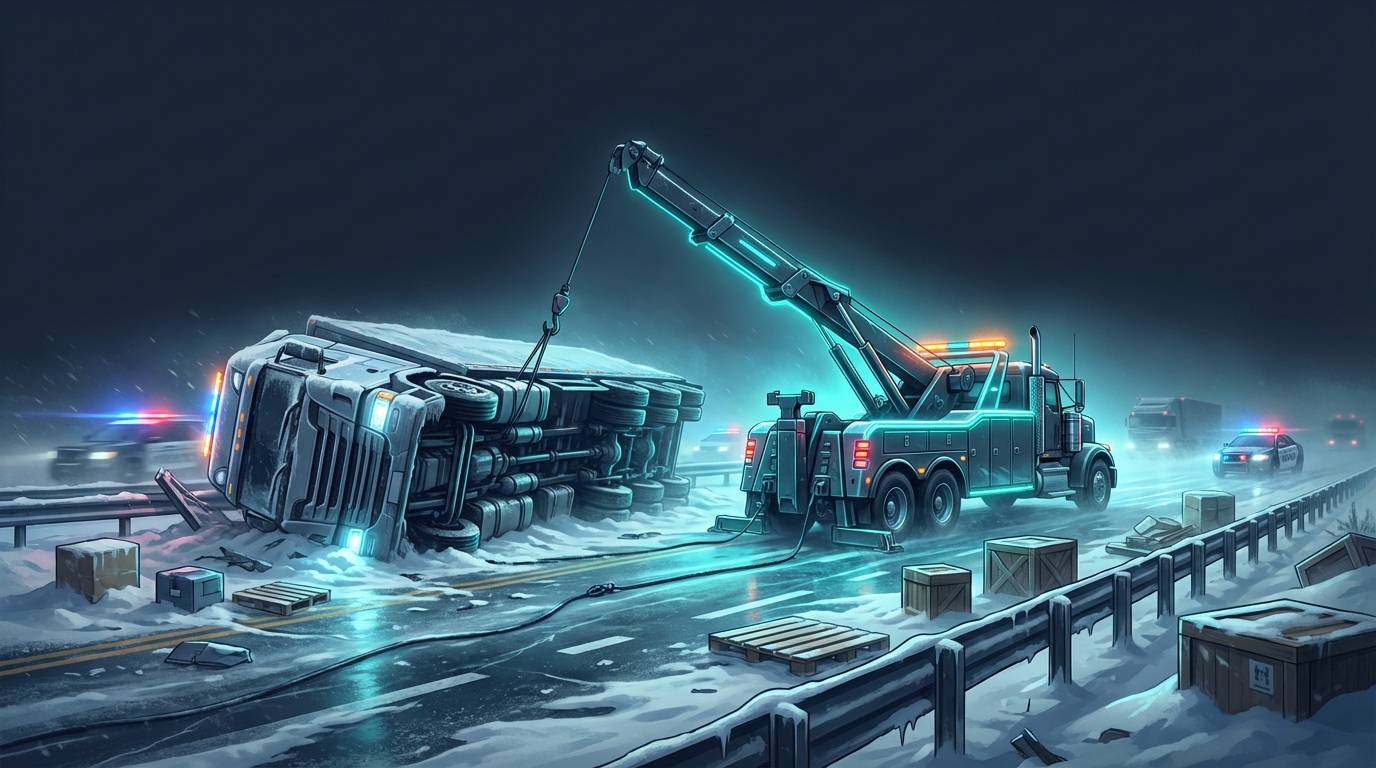
A fully loaded tractor-trailer blew a tire and rolled over on the 401 near Kingston during a winter storm. The complex recovery required a heavy-duty rotator tow truck and extensive cleanup, blocking traffic for hours.
Damaged Client Vehicle During Tow
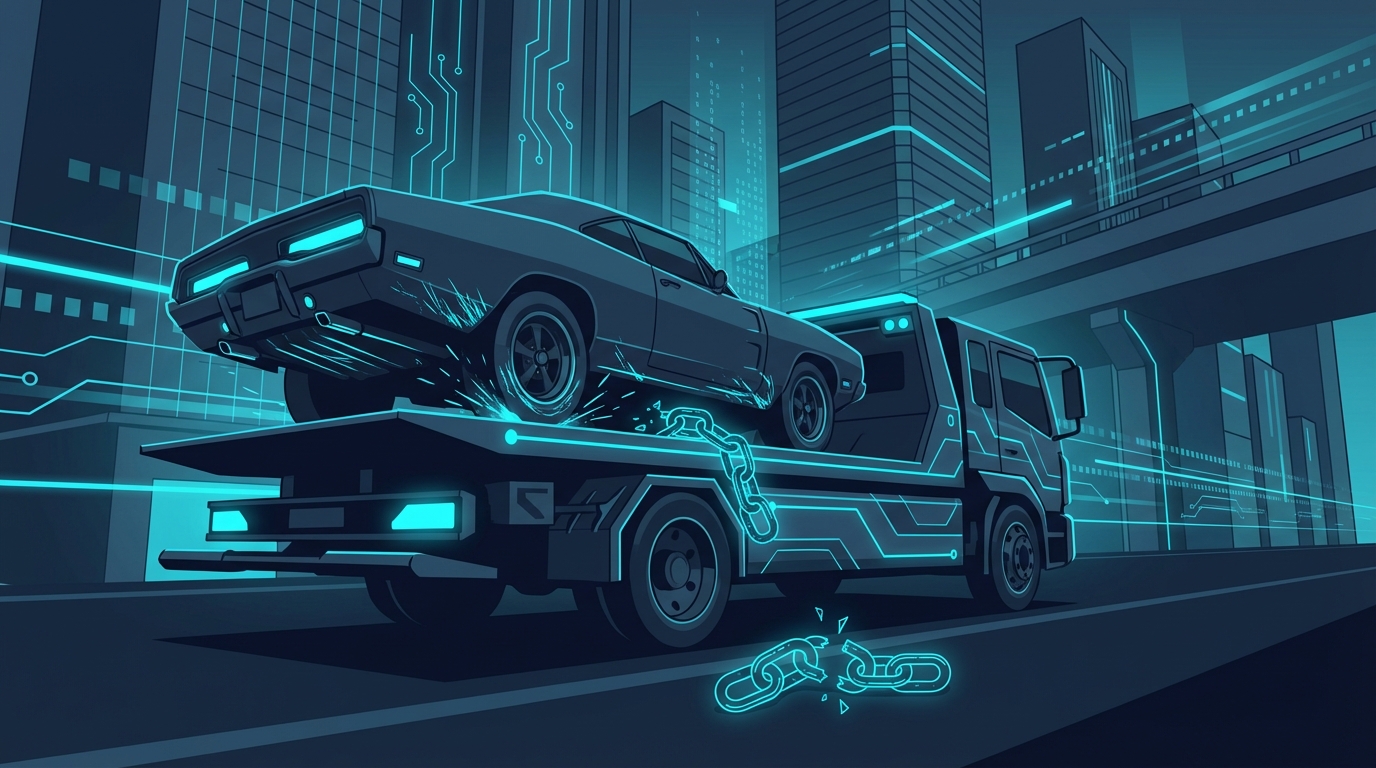
A tow operator in Mississauga was transporting a client's classic car. During the tow, an improperly secured chain caused significant damage to the car's undercarriage, valued at $12,000.
Box Truck Stranded in Rural Northern Ontario
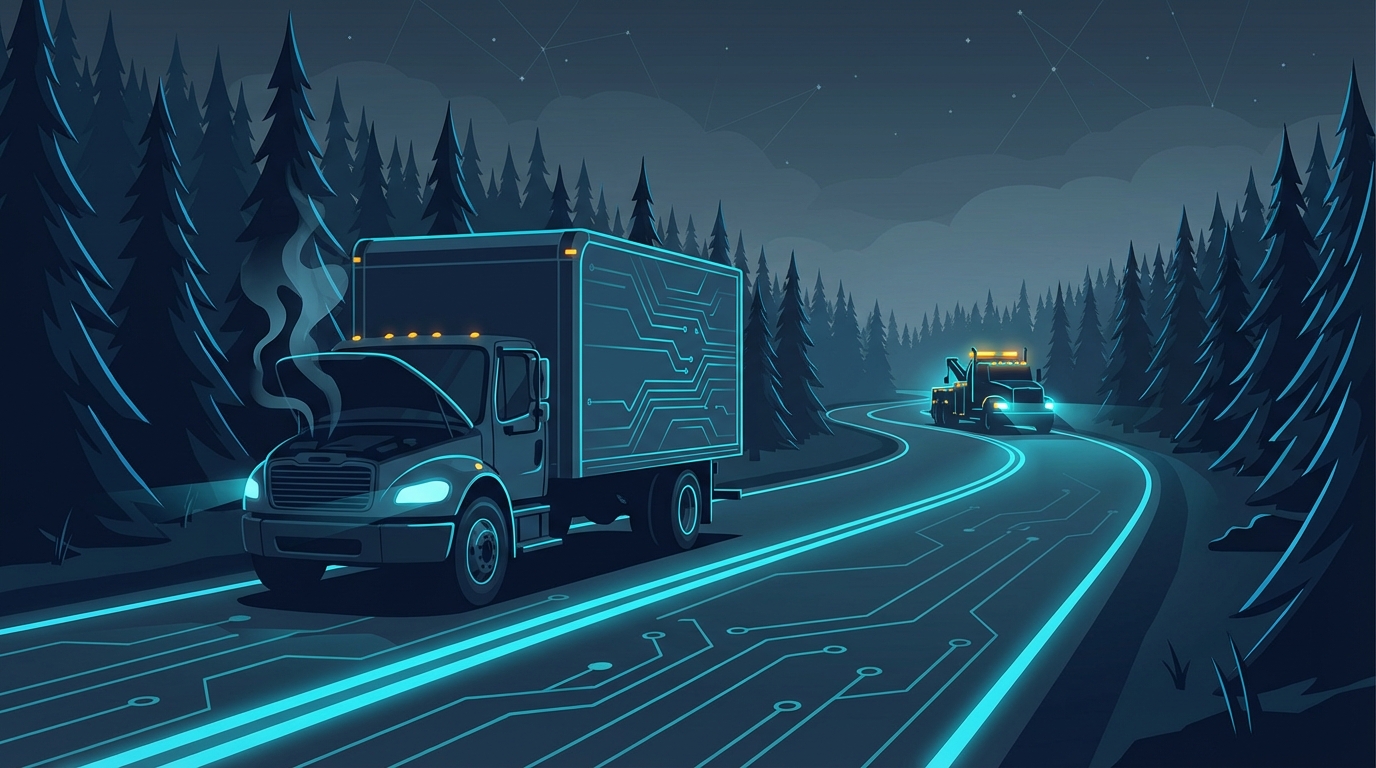
A 5-ton box truck's engine seized on a remote road between Sudbury and Timmins. The nearest qualified repair facility was over 200km away, leading to a significant long-distance towing charge.
Critical Distinction: Towing vs. On-Hook Liability
Understanding the difference between these two coverages is vital. One protects your truck, while the other protects your business from liability when handling a customer's vehicle.
Towing Coverage (For Your Truck): This is for any carrier who owns and operates trucks. It covers the cost of moving your own vehicle when it is disabled due to a covered peril like an accident, fire, or theft.
On-Hook Liability (For Customers' Vehicles): This is mandatory for any business that tows vehicles for hire. It covers your legal liability for physical damage to a customer's vehicle while it is in your care, custody, and control—meaning while you are actively towing or storing it.
MTO & CVOR Compliance
Under Ministry of Transportation (MTO) regulations, tow operators in Ontario are subject to strict safety and insurance requirements. Operating without adequate On-Hook liability can lead to fines starting at $490, CVOR points, and having your plates seized.
5 Tips to Manage Towing Insurance Costs
Review Your Policy Annually
Don't assume you're covered. Check your policy documents specifically for a 'Towing' or 'Roadside Assistance' endorsement and confirm the coverage limit.
Bundle It with Your Main Policy
Adding towing coverage as an endorsement to your existing commercial auto policy is almost always cheaper than buying a standalone roadside assistance plan.
Choose an Appropriate Deductible
Like with physical damage coverage, selecting a higher deductible ($1,000 vs $500) for your towing endorsement can lower your annual premium.
Maintain a Clean CVOR Record
Insurers see a clean safety record as a sign of lower risk, which translates directly into lower premiums across all your commercial coverages.
Ask About the OPCF 43 Endorsement
For a small additional cost, the 'Removing Depreciation Deduction' endorsement ensures you get new OEM parts for repairs, a valuable addition for any owner-operator.

Carefully review your policy with a licensed broker to ensure you have the right towing endorsements.
Get Your Commercial Towing Insurance Quote
Free quotes from licensed Ontario brokers
Frequently Asked Questions
Is towing automatically included in my Ontario commercial truck insurance?
No. Standard commercial auto policies typically do not cover the cost of towing your own disabled vehicle. It must be added as a specific endorsement, often called Towing and Recovery or specified under your physical damage coverage.
What is the difference between Towing and On-Hook insurance?
Towing coverage pays to transport your own insured truck if it's disabled. On-Hook Liability insurance covers damage to a customer's vehicle that you are towing for a fee. If you run a tow truck business, you need both.
How much does a heavy-duty tow cost in Ontario?
A simple heavy-duty tow can start at $500-$800, but complex recoveries involving rollovers or remote locations can easily exceed $10,000. Rates are often calculated per hour and depend on the equipment needed.
What is the OPCF 43 endorsement in Ontario?
The OPCF 43 (Removing Depreciation Deduction) is a valuable endorsement. If your truck is damaged in a covered claim, the insurer agrees to waive depreciation on parts, meaning they pay for new parts, not used ones. This is crucial for maintaining vehicle value and performance.
Are there limits to how far my disabled truck can be towed?
Yes, most towing endorsements cover the cost to tow your vehicle to the 'nearest qualified repair facility'. If you choose a shop that is further away, you may have to pay the difference in mileage out-of-pocket.
Does this coverage apply if my truck is impounded?
Generally, no. Towing due to regulatory reasons like a CVOR infraction, police impoundment, or abandonment is typically excluded from coverage.
Related Coverage Options
This content is for informational purposes only and does not constitute insurance advice. Insurance requirements and pricing vary. Always consult a licensed Ontario insurance broker for advice specific to your situation.