

 Adam Mitchell, IBAO Young Broker of the Year 2019
 Ontario Trucking Insurance is a network of RIBO-licensed insurance brokers specializing in commercial trucking. All content is written and reviewed by active industry professionals with direct underwriting experience. Expert review by Adam Mitchell, IBAO Young Broker of the Year 2019 (Mitch Insurance Brokers), edited by Fred Morison (Morison Insurance Brokers). Our editorial standards →
Liability insurance covers damage you cause to others—but what about your own truck? Physical damage insurance protects your $80,000 to $200,000+ investment against accidents, fire, theft, vandalism, and weather damage. With rising truck replacement costs in 2026, this coverage is more essential than ever for staying in business.

Ontario winters create hazardous conditions that make physical damage coverage essential
What Is Physical Damage Insurance?
Physical damage insurance for commercial trucks has two main components that work together to protect your equipment:
Physical Damage Coverage Includes:
- Collision Coverage — Pays for damage when your truck hits another vehicle, object, or overturns. Covers accidents regardless of fault.
- Comprehensive Coverage — Covers non-collision losses: fire, theft, vandalism, falling objects, weather damage, animal strikes, and glass breakage.
- Specified Perils — Some policies offer coverage for only named risks (fire, theft, etc.) at a lower premium than full comprehensive.
- Trailer Coverage — Can be added to cover your owned trailers under the same policy.
Coverage is typically for the actual cash value (ACV) of your truck—what it's worth at the time of loss, not what you paid for it. Some policies offer "agreed value" coverage where you and the insurer agree on the truck's value upfront.
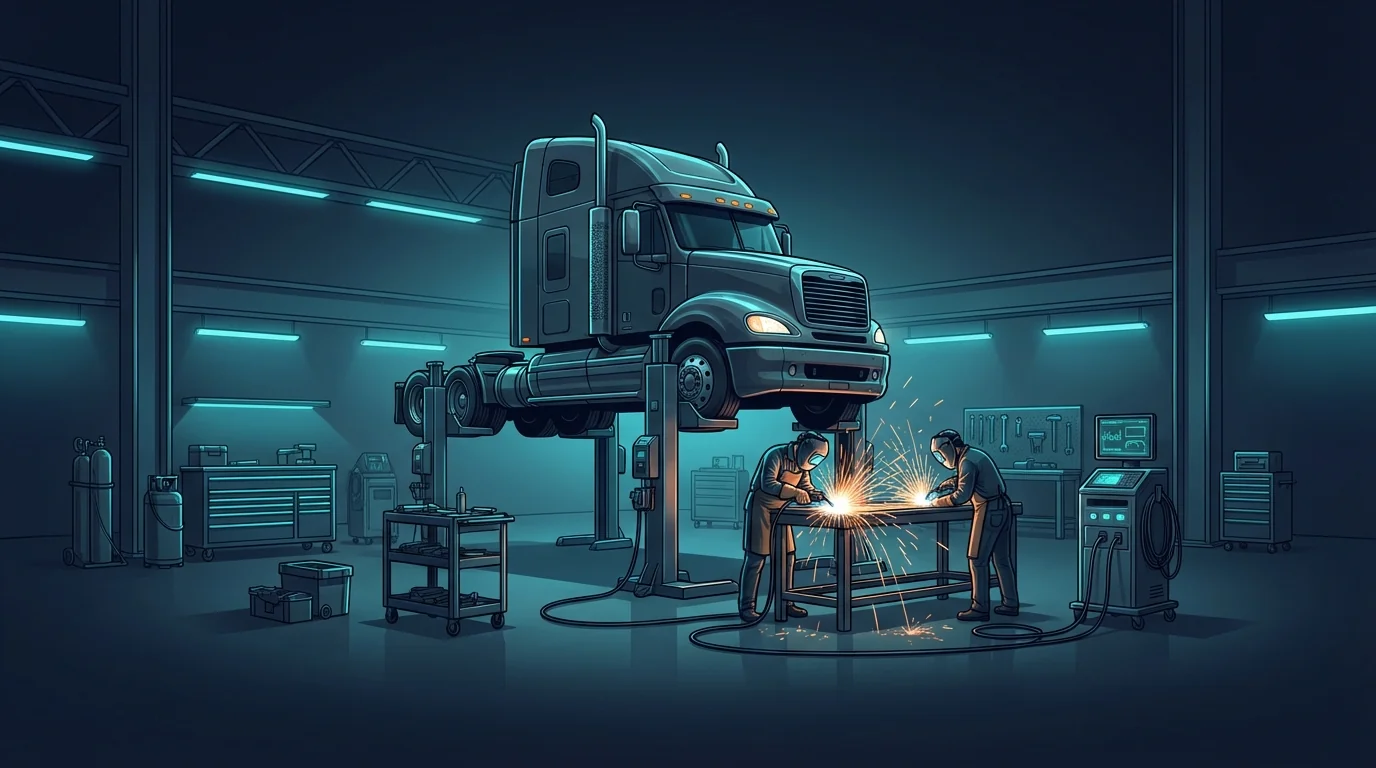
Physical damage coverage pays for professional repairs to get you back on the road quickly
Important: Financing Requirements
If you financed or leased your truck, your lender almost certainly requires physical damage coverage. Operating without it violates your loan agreement and could trigger immediate repayment. The lender will be listed as a "loss payee" on your policy.
Why Do You Need Physical Damage Coverage?
Protect Your Investment
A new commercial truck costs $150,000-$200,000+. Even used trucks run $60,000-$120,000. Physical damage coverage ensures one accident doesn't destroy your life savings.
Lender Requirements
If you financed your truck, physical damage coverage isn't optional—your lender requires it. Dropping coverage violates your loan and could trigger repossession.
Stay in Business
If your truck is totaled without coverage, you can't work. Physical damage insurance provides funds to repair or replace your truck quickly, minimizing downtime.
Cover Winter Accidents
Ontario winters cause countless single-vehicle accidents. Without collision coverage, sliding off an icy road could cost you $50,000+ in repairs out of pocket.
How Much Does Physical Damage Insurance Cost?
Physical damage insurance typically costs $2,500 to $8,000 per year for a single truck. Your premium depends primarily on the truck's value and your chosen deductible.
| Truck Value | Annual Premium (est.) |
|---|---|
| $50,000 - $75,000 | $2,500 – $3,500 |
| $75,000 - $100,000 | $3,000 – $4,500 |
| $100,000 - $150,000 | $4,000 – $6,000 |
| $150,000 - $200,000 | $5,500 – $8,000 |
| $200,000+ | $7,000 – $10,000+ |
Factors Affecting Your Premium:
Real Claim Examples
Physical damage claims are common in trucking. Here are three scenarios where this coverage protected Ontario owner-operators from devastating losses:
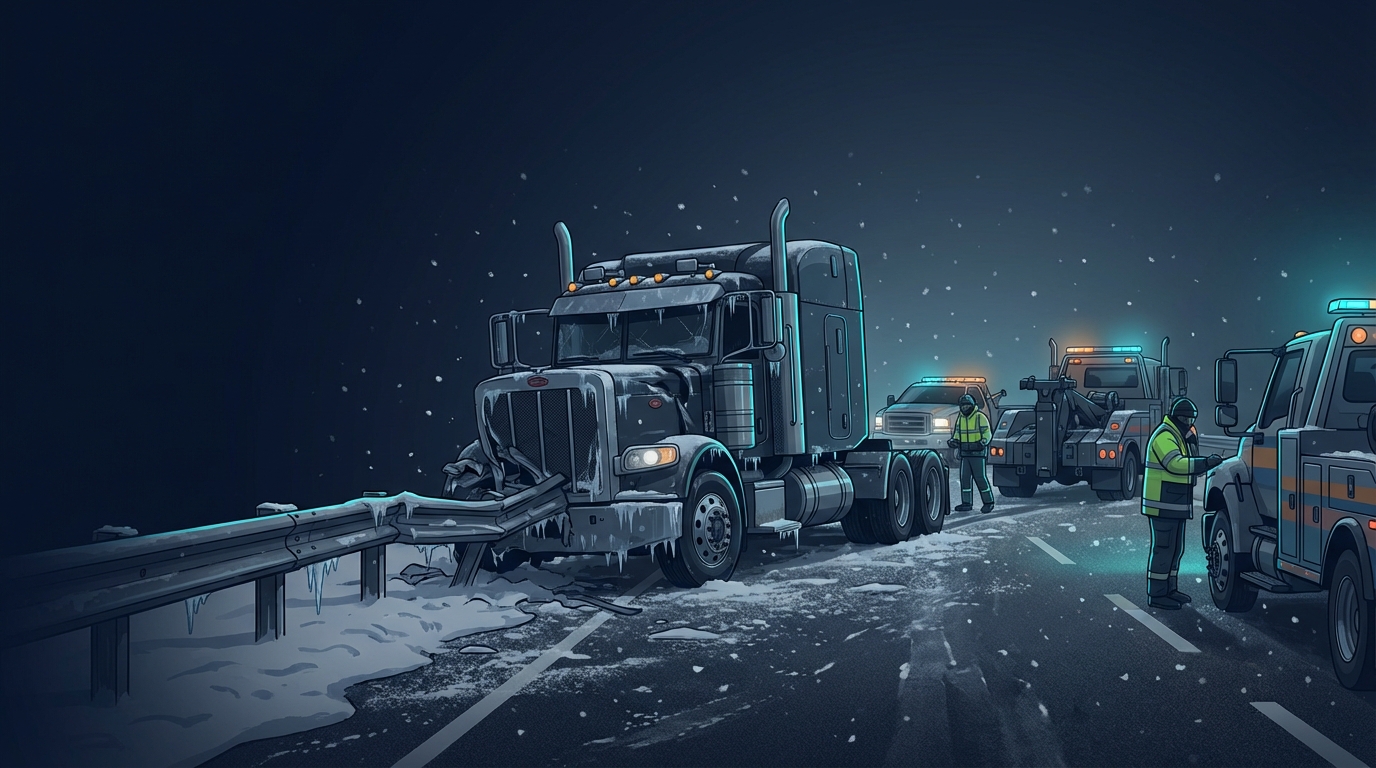
Jackknife Accident on Highway 400
During a winter storm near Barrie, an owner-operator's 2021 Peterbilt 579 jackknifed on black ice. The truck slid into a guardrail, causing $95,000 in damage to the cab, frame, and engine. The trailer sustained an additional $25,000 in damage.
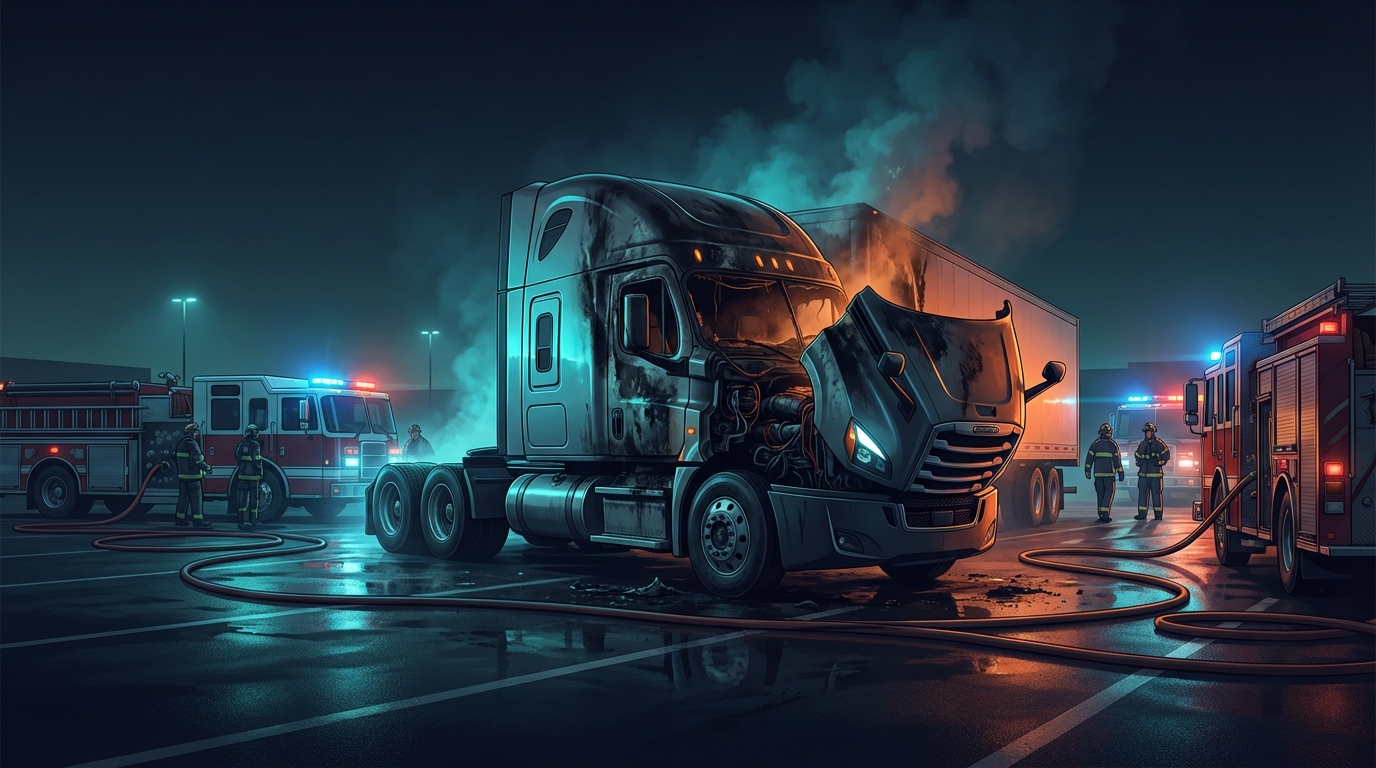
Engine Fire in Mississauga
An electrical short caused an engine compartment fire in a 2020 Freightliner Cascadia while parked at a shipper's facility. The fire totaled the truck, valued at $145,000. The driver was able to escape safely.
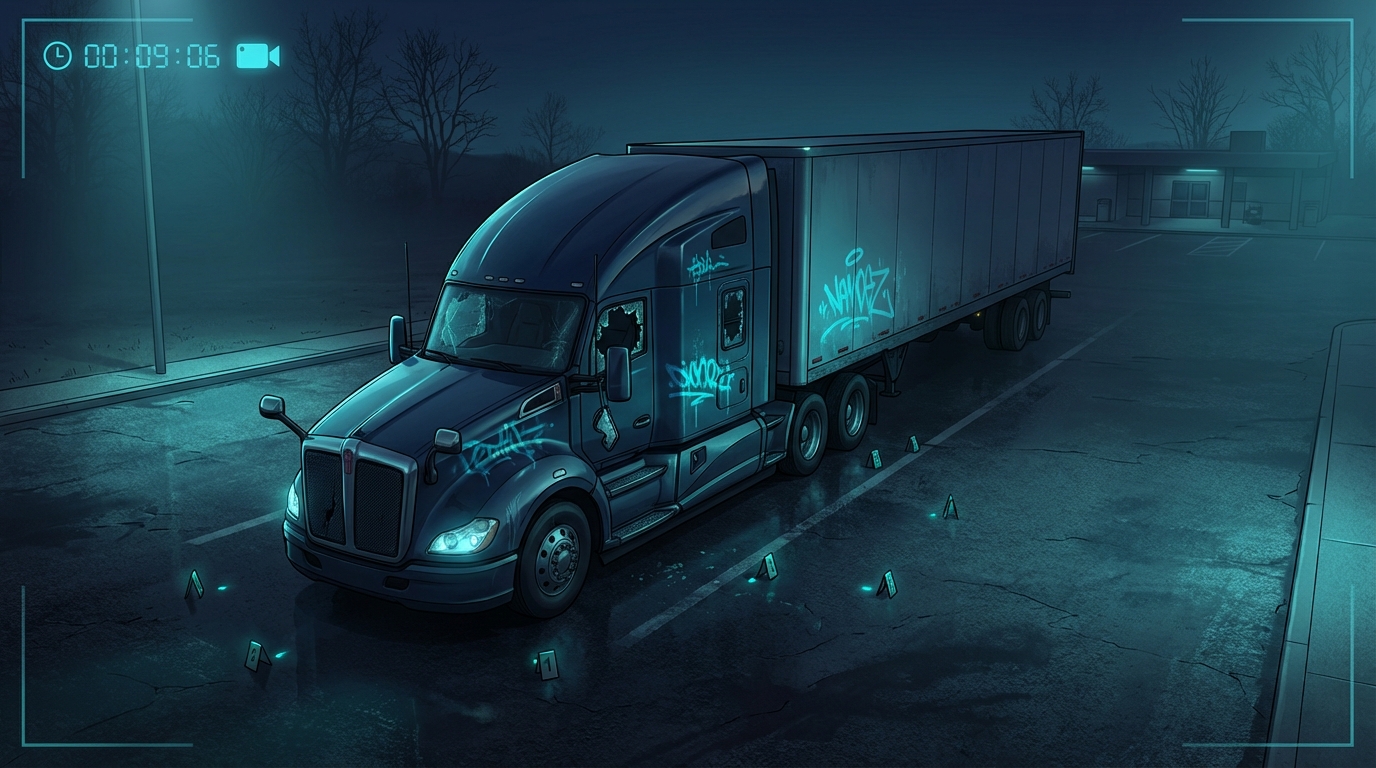
Vandalism at Truck Stop
Overnight vandals smashed windows and damaged the interior of a Kenworth T680 parked at a rest area near Kingston. Repairs totaled $18,000 for new windows, electronic components, and interior restoration.
Tips to Reduce Physical Damage Costs
Consider Higher Deductibles
Raising your deductible from $1,000 to $2,500 can reduce premiums by 15-20%. Just make sure you have the cash to cover the deductible if you have a claim.
Use Secure Parking
Parking in a fenced, well-lit yard with security cameras reduces theft and vandalism risk. Some insurers offer 5-10% discounts for verified secure parking.
Install Anti-Theft Devices
Kill switches, GPS tracking, and steering wheel locks can reduce comprehensive premiums. Dash cams help with collision claims by documenting what happened.
Drop Coverage on Older Trucks
If your truck is worth less than $30,000 and you own it outright, consider dropping collision and keeping only comprehensive. Weigh the savings against the risk.
Maintain Accurate Valuations
Don't over-insure an older truck. If your policy shows $100K but the truck is worth $70K, you're paying too much. Update values annually.
Industry Classification Codes
Physical damage coverage is rated based on operation type. Trucking operations are classified by NAICS codes (484110 for local, 484121 for long-distance) with corresponding WSIB and ISO ratings.
Ontario Trucking Insurance Classification Reference
Cross-reference table for NAICS, WSIB, ISO, and NCCI codes
| Category | NAICS (i) | WSIB (i) | ISO (i) | Risk Level | Avg. Premium |
|---|---|---|---|---|---|
| General Freight Trucking, Long-Distance Long-haul trucking operations exceeding 150km radius | 484121 | 70220 | CA 7219 | High | $12,000 - $18,000/year |
| General Freight Trucking, Local Local delivery within 150km radius | 484110 | 70210 | CA 7218 | Medium | $6,000 - $10,000/year |
| Specialized Freight - Refrigerated Temperature-controlled cargo transport | 484230 | 70230 | CA 7228 | High | $14,000 - $22,000/year |
| Specialized Freight - Flatbed/Heavy Haul Oversized loads, machinery, construction equipment | 484220 | 70230 | CA 7222 | Very High | $18,000 - $28,000/year |
Note: Premium estimates are based on 2024 Ontario market rates for operators with clean CVOR records. Actual premiums vary based on experience, claims history, fleet size, and cargo type. Get a personalized estimate →
Get Your Physical Damage Truck Insurance Quote
Free quotes from licensed Ontario brokers
Frequently Asked Questions
What's the difference between collision and comprehensive?
Collision covers damage when your truck hits something (another vehicle, guardrail, tree, etc.) or overturns. Comprehensive covers everything else: fire, theft, vandalism, weather, falling objects, and animal strikes. Most owner-operators need both.
Should I get "agreed value" or "actual cash value" coverage?
Actual cash value (ACV) pays what the truck is worth at the time of loss, accounting for depreciation. Agreed value locks in a set amount upfront. Agreed value costs more but eliminates disputes over what your truck is worth. It's often worth it for newer trucks.
Does physical damage cover my trailer?
Not automatically. Your truck policy typically covers only the power unit. You need to add trailer coverage separately, either under your physical damage policy or a standalone trailer policy. If you pull others' trailers, you may need trailer interchange coverage.
What happens if my truck is totaled?
The insurer will pay the actual cash value (or agreed value) of the truck, minus your deductible. If you owe more than the truck is worth, you'd still owe the difference. "Gap coverage" can protect against this for financed trucks.
Am I covered if I damage my truck while driving someone else's trailer?
Yes, your physical damage policy covers your truck regardless of whose trailer you're pulling. However, if you damage their trailer, you'd need trailer interchange or non-owned trailer coverage to pay for that damage.